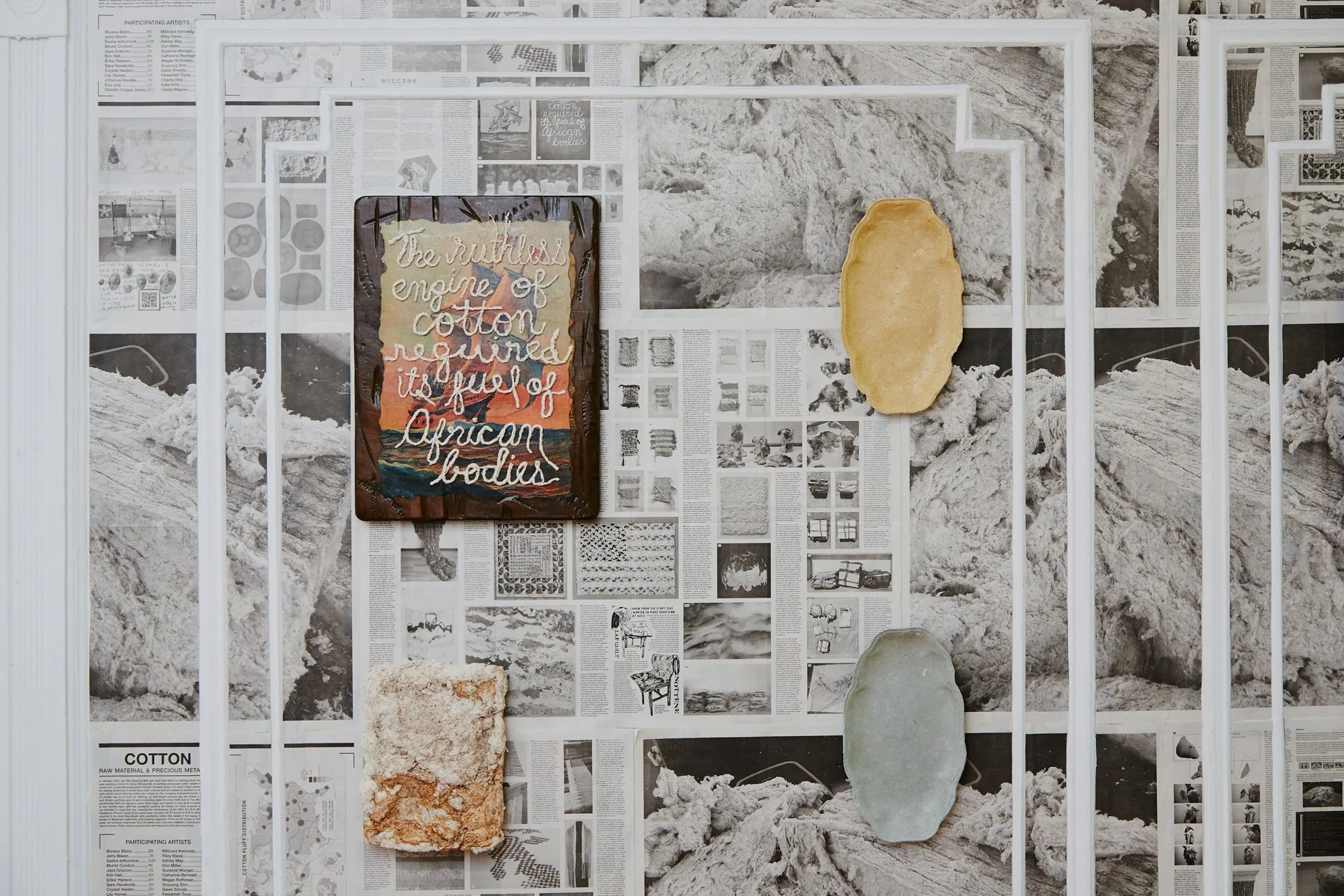
COTTON: RAW MATERIAL & PRECIOUS METAPHOR
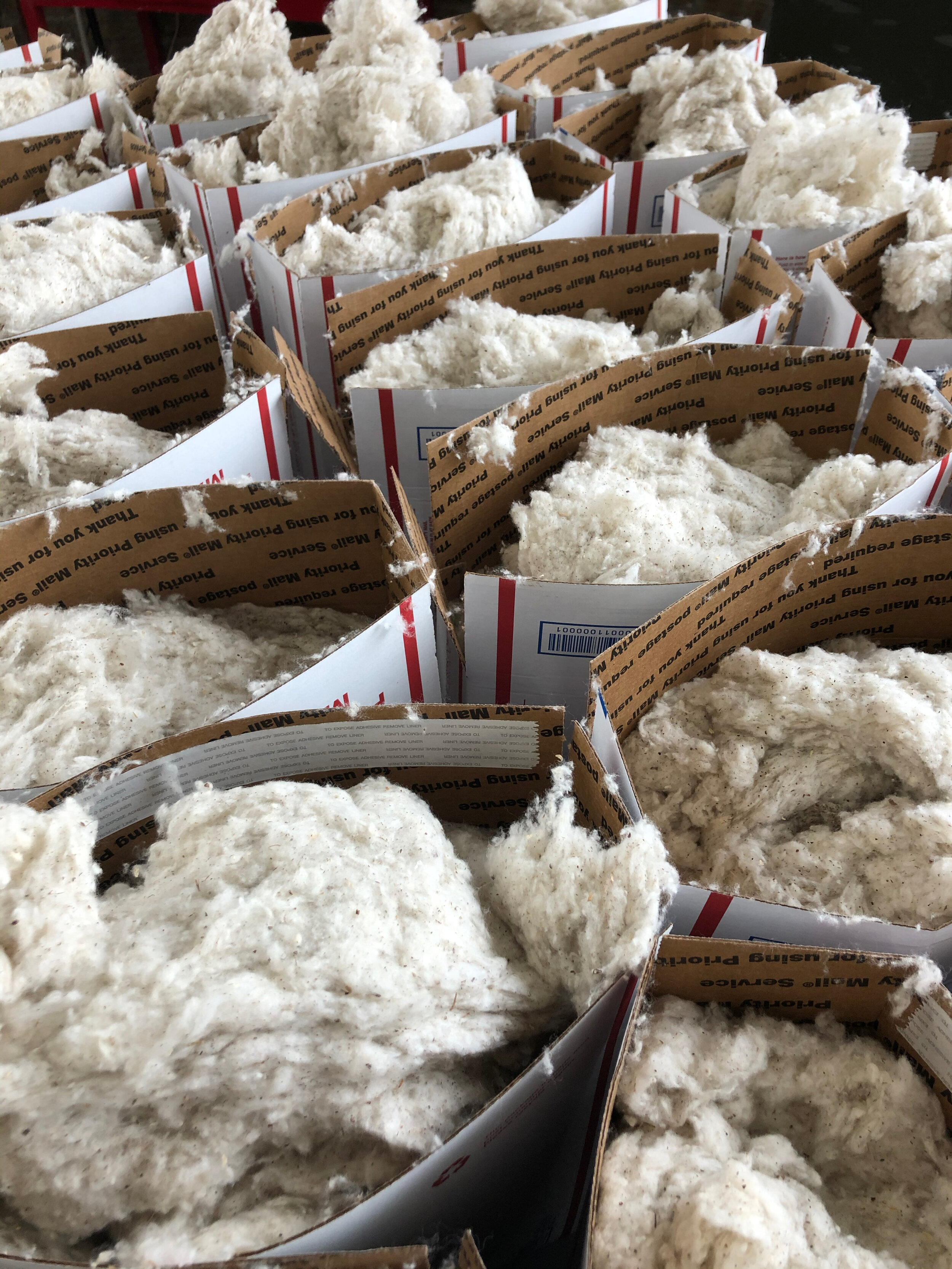
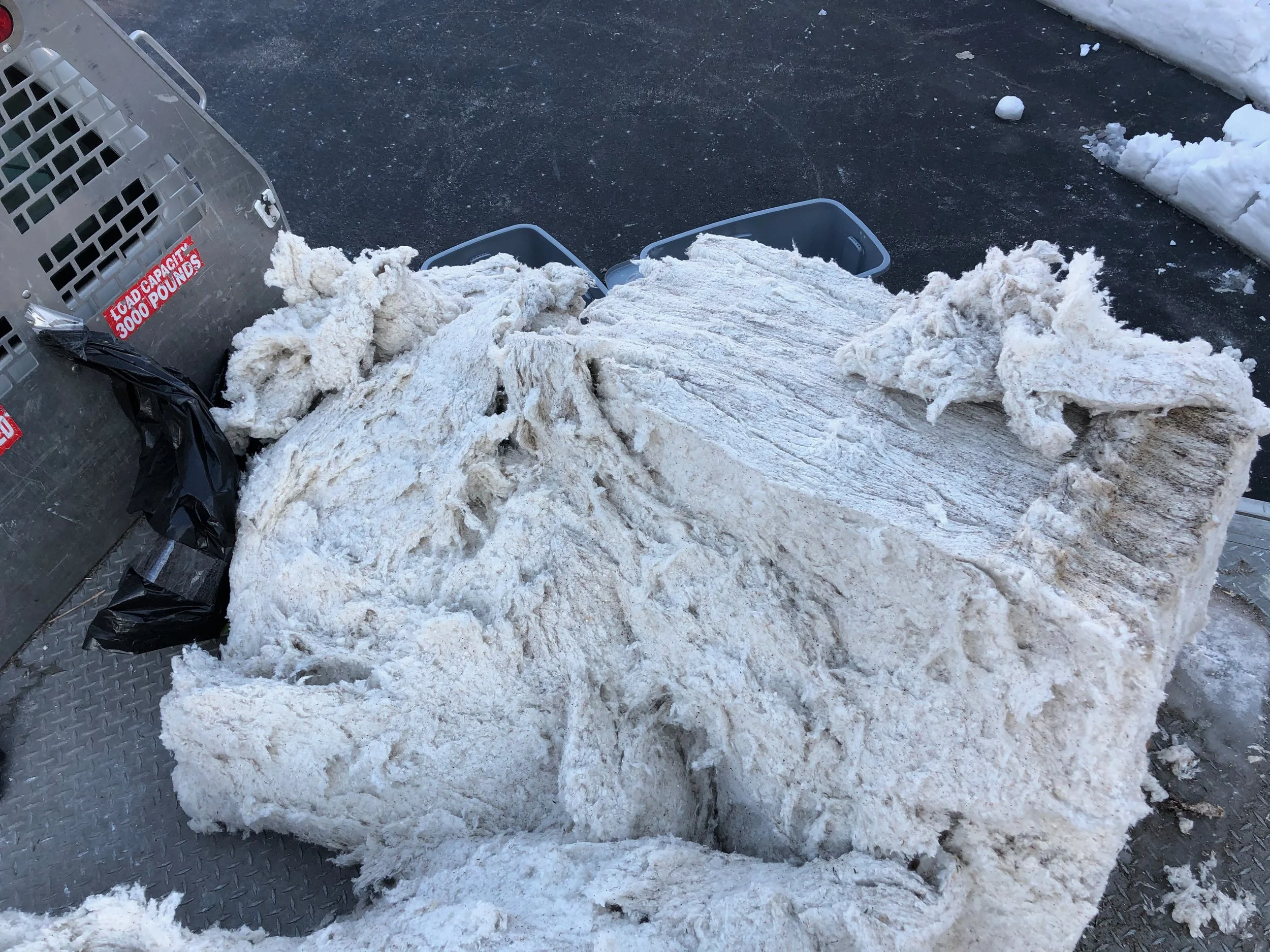
In January 2020, we got word that Notre (a clothing store here in Chicago) was seeking a home for some 500 pounds of partially-processed cotton waste material. It had come from a manufacturing plant in South Carolina where, if it hadn’t been diverted to Chicago for display purposes, it would have been cleaned and processed to produce a recycled cotton yarn which would then be made into t-shirts by the company Everybody.world.
A few months later, with the pandemic putting the freeze on most projects and programs, we decided to make this raw material the centerpiece of the 2020 W.A.R.P. (Westtown Artist Residency Project) cycle. From April-June, we sent out 97 boxes of cotton fluff to artists around the country to do with it what they would. We’ve received a great variety of responses back, which were documented in an exhibition and publication, Cotton: Raw Material & Precious Metaphor.
The timing of this material-prompt felt particularly potent, with that year’s protests against systemic racism and police brutality forcing re-evaluations of racial inequality in our nation’s history & present. Cotton—its production, processing, profitability—was the driving force in the antebellum plantation slavery system and the removal of Native Americans from their lands across the Southeast. And even if those histories aren’t always immediately apparent in the material itself, they are there, and if one listens closely, the material may just offer a means of understanding where we’ve been and where we might go...


EXHIBITION/PUBLICATION
Of the 97 boxes of cotton we distributed, we received 26 responses from artists around the world. This work was compiled into an exhibition held at Brooklyn’s Room 482 (June 2021) and the Wayback Gallery at the Chicago Weaving School (April 2022). The work is also shared in a corresponding publication (available for purchase) which includes documentation of the diverse responses to the raw material, a sampling of cotton fluff and an interactive activity board designed to encourage investigation and engagement with the raw material.
Featuring contributions from:
Bryana Bibbs / Jerry Bleem / Sasha deKoninck / Muriel Condon / Jaya Griscom / Kim Hall / Erika Hanson / Sara Havekotte / Crystal Heiden / Lily Homer / Johanna Houska / Eva Joly / Deirdre Colgan Jones / Millicent Kennedy / Riley Kleve / Ashley May / Dori Miller / Suzanne Morgan / Catherine Reinhart / Megan Rothstein / Soyoung Shin / Gwen Smuda / Fereshteh Toosi / Charlie Vinz / Katie Vota / Ursula Wagner


We are delighted to release this publication documenting the 2020 cycle of the Westtown Artist Residency Project. In the spring of 2020, we distributed 97 boxes of cotton fluff (waste material that was donated to us by Chicago store Notre, by way of clothing manufacturer Everybody.world) to artists around the country to do what they would with. This gesture of dispersed material collectivity was, of course, a reaction to the limitations of the pandemic and a way of opening up our annual residency program to a wide swath of participating artists.
The publication and the corresponding exhibition at Brooklyn’s Room 482 include documentation, in both image and text, of the diverse responses to the raw material, a sampling of cotton fluff and an interactive activity board designed to encourage investigation and engagement with the raw material. We hope you enjoy it.
Featuring contributions from:
Bryana Bibbs / Jerry Bleem / Sasha deKoninck / Muriel Condon / Jaya Griscom / Kim Hall / Erika Hanson / Sara Havekotte / Crystal Heiden / Lily Homer / Johanna Houska / Eva Joly / Deirdre Colgan Jones / Millicent Kennedy / Riley Kleve / Ashley May / Dori Miller / Suzanne Morgan / Catherine Reinhart / Megan Rothstein / Soyoung Shin / Gwen Smuda / Fereshteh Toosi / Charlie Vinz / Katie Vota / Ursula Wagner
Publication design by Kendall Schauder, Matt Wagstaffe and Emily Winter,
Exhibition design by Alice Gong and Kendall Schauder
20% of publication sales will be donated to the Black Family Land Trust to support efforts towards Black landownership and wealth retention, particularly in the Southeast. The Great Land Robbery by Vann Newkirk II provides an excellent history of the long-ranging and systemic challenges faced by African-American farmers and landowners since Emancipation.